Managing chemical import compliance requires aligning regulatory documentation with customs requirements. This process ensures legal entry for bulk chemicals by verifying classification, labeling, and permits before shipment.
- Confirm the chemical classification and applicable regulations before requesting a shipment.
- Prepare a complete set of import documentation, including certificates of analysis and transport declarations.
- Coordinate with customs brokers and logistics partners to avoid clearance delays.
- Verify that packaging and labeling meet both origin and destination requirements.
- Conduct a final internal review to catch errors before the goods arrive.
Understanding the Scope of Import Compliance
Chemical import compliance requirements span multiple jurisdictions and regulatory bodies. A shipment of industrial solvents, resins, or catalysts must satisfy the rules of the exporting country, the importing country, and any transit points. The process is not a single event but a sequence of checks that begin long before the physical product leaves the factory.
Engineers and procurement teams often assume that compliance is handled by the freight forwarder or the customs broker. In practice, the buyer remains responsible for the accuracy of the technical data provided. If the Safety Data Sheet is outdated or the product classification is wrong, the entire shipment can be held. The cost of a delay is rarely just the freight. It is the idle production line, the expired batch, and the reputational risk of a compliance failure.
Preparing the Technical Documentation
The first step is to assemble the technical file for the specific chemical being imported. This file must contain the current version of the Safety Data Sheet, the Certificate of Analysis, and any product-specific certificates required by the destination market.
- Gather the current Safety Data Sheet. Verify that the revision date is recent and that the document reflects the exact composition of the bulk material. A generic SDS for a chemical family is not sufficient if the import requires a specific formulation.
- Obtain the Certificate of Analysis. This document confirms that the batch meets the agreed specifications. For bulk chemicals, the CoA must match the chemical formula and grade stated in the commercial invoice.
- Compile regulatory permits. Some chemicals require prior notification, a license, or a health authority approval before they can be cleared. Identify these early, as processing times can extend for weeks.
The reason for this step is to create a single, authoritative source of truth. When customs officers ask for proof of purity or hazard status, you want to present a coherent set of documents, not a collection of conflicting versions.
Classifying the Chemical and Hazard Status
Accurate classification is the backbone of import compliance. The chemical must be assigned the correct Harmonized System code and the appropriate hazard classification for transport.
- HS Code: This is the international standard for classifying goods. A mistake here can lead to incorrect duty rates or even rejection.
- GHS Classification: Determines the hazard labels and signal words. The destination country may have local variations, so the classification must be mapped to local requirements.
- Transport Class: Essential for the Dangerous Goods Declaration. This dictates how the material must be packed and labeled for sea, air, or road transport.
Engineers should cross-check the classification against the local labeling rules. A chemical may be classified as a “Corrosive” under GHS but require a specific local pictogram or statement. The documentation must reflect this mapping. If there is any ambiguity, consult the regulatory authority in the destination country before shipment.
Managing Customs Clearance Requirements
Customs clearance is the administrative process where the shipment is declared, assessed, and released. This step is where technical documents meet trade law.
- Draft the commercial invoice. It must include the gross weight, net weight, country of origin, and the exact description of the chemical. Use the specific grade and grade name, not just “chemical solution.”
- Prepare the packing list. List every container or package, its weight, and its dimensions. For bulk liquids in IBCs or tankers, specify the number of units and the total volume.
- Complete the customs declaration. This form requires the HS code, the declared value, and the terms of trade. The broker will use this to calculate duties and taxes.
The reason for strict accuracy here is that customs authorities use risk-based scanning. A mismatch between the invoice and the packing list can trigger a physical inspection. For bulk chemicals, a physical inspection is costly and disruptive. It requires unloading, sampling, and re-packing.
Aligning Documentation with Transport Regulations
The method of transport dictates a specific set of documentation. For bulk chemicals, the transport documents are not optional; they are mandatory for safety.
| Document Type | Purpose | Key Requirement |
|---|---|---|
| Dangerous Goods Declaration | Compliance with transport safety rules | Must match the UN number and hazard class |
| Certificate of Origin | Duty calculation and trade agreements | Must be issued by the exporting chamber of commerce |
| Bill of Lading | Proof of shipment and ownership | Must match the number and description of goods |
| Transport Insurance Certificate | Financial protection | Must cover the declared value and transit route |
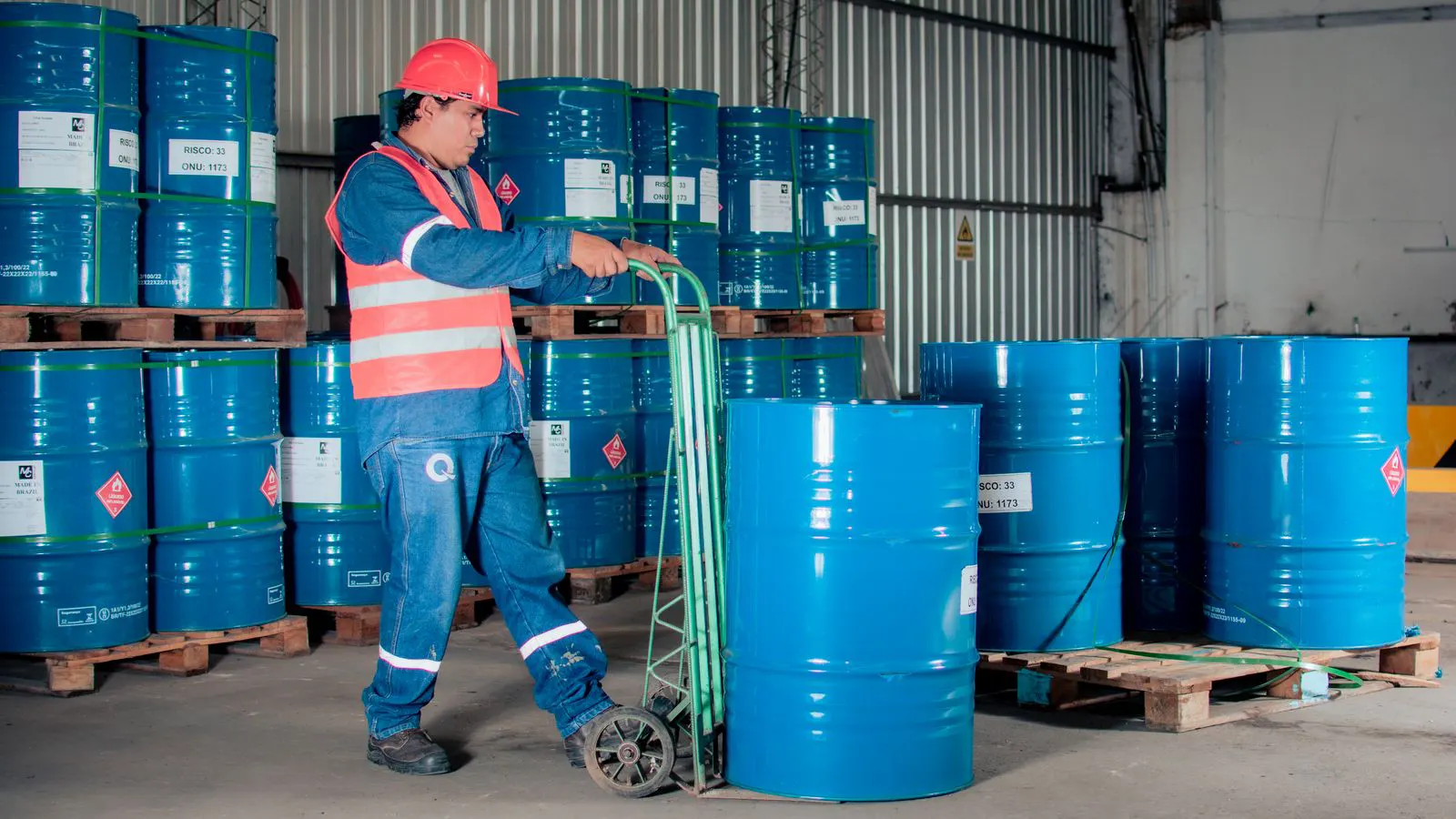
The Dangerous Goods Declaration is the most critical transport document. It must be signed by a certified person. If the chemical is classified as Class 8 (Corrosives), the packaging must be rated for that specific hazard. The documentation must confirm that the packaging meets the relevant standards. If the transport mode changes, for example from sea to road, the documentation must be updated to reflect the new requirements.
Coordinating with Local Brokers and Authorities
You cannot manage the process in isolation. The local customs broker and the logistics partner are your first line of defense against errors.
- Share the full file early. Send the SDS, CoA, and classification data to the broker before the vessel sails. This allows them to pre-validate the HS code and check for any local bans or restrictions.
- Clarify the Incoterms. Knowing whether the terms are FOB or CIF affects who is responsible for the export documentation. Misunderstanding this leads to gaps in the file.
- Confirm inspection requirements. Some destinations require a pre-shipment inspection or a post-arrival testing. Ask the broker if a physical inspection is likely. If so, arrange for a third-party lab to be on standby.
The reason for this coordination is that brokers have access to real-time regulatory updates. They know which inspectors are strict and which documents are frequently rejected. They can also identify if a specific chemical is under temporary ban or requires a special permit that was not in your initial check.
Executing the Arrival and Verification Process
The final step is the physical arrival and the final verification. This is where the process closes.
- Monitor the clearance status. Work with the broker to track the release. If the status remains “Under Review,” ask for the specific reason.
- Conduct a receiving inspection. When the goods arrive, check the physical labels against the documentation. Verify the batch number on the container matches the CoA.
- Review the final compliance file. Archive the cleared customs documents, the transport declarations, and the receiving inspection report. This file serves as your proof of compliance for future audits.
The reason for this final verification is to catch any discrepancies before they become quality issues. A container may arrive with a damaged label. A batch may be off-spec. Finding this immediately allows you to return the goods or reject the batch. If you accept the goods without checking, you assume the liability for the non-conforming material.
Common Mistakes That Cause Delays
Even with a structured process, errors occur. The most common mistakes are preventable.
- Outdated Safety Data Sheets. Using a version from two years ago when the chemical has changed its formulation or classification.
- Vague Product Descriptions. Listing “industrial fluid” instead of the specific chemical name and grade.
- Missing Certificates. Forgetting to include the Certificate of Origin or the specific regulatory permit.
- Misclassification. Assigning the wrong HS code or hazard class, leading to incorrect duties or transport rejection.
- Poor Communication. Not sharing the full documentation file with the broker, forcing them to guess or request documents at the last minute.
These mistakes usually result in the same outcome: the shipment is held. The cost is not just the storage fee. It is the production stoppage at the receiving plant.
Final Verification Checklist
Before the shipment is released, run a final check against this checklist.
- Documentation Match: Do the invoice, packing list, and bill of lading match perfectly?
- Regulatory Compliance: Are all permits and licenses in the file?
- Hazard Classification: Is the UN number and hazard class correct for the transport mode?
- Labeling: Do the physical labels on the containers match the GHS and local requirements?
- Broker Confirmation: Has the customs broker confirmed the release is expected within the agreed timeframe?
If any of these items are not confirmed, do not accept the shipment. Hold the goods and resolve the discrepancy. A delayed shipment is a manageable risk. A non-compliant shipment is a compliance failure.
Frequently asked questions
Who is responsible for ensuring import compliance?
The buyer is ultimately responsible for the accuracy of the technical data and classification. The customs broker handles the administrative process, but the buyer must provide correct information to avoid delays or rejections.
Can I use a generic Safety Data Sheet for a bulk chemical import?
No. The SDS must reflect the specific formulation and grade being shipped. A generic SDS for a chemical family is not sufficient if the import requires a specific product classification or composition.
How long does customs clearance for chemicals usually take?
The timeframe varies by country, port, and risk level. Standard shipments may clear in a few days, while those flagged for inspection can take several weeks. Always allow a buffer time in your production schedule.
What happens if the HS code is wrong?
A wrong HS code can lead to incorrect duty calculations, additional fees, or rejection of the shipment. It may also trigger a physical inspection to verify the identity of the goods.
Do I need a separate permit for every batch?
It depends on the chemical and the destination. Some chemicals require a general license for the product type, while others require a specific permit for each batch or shipment. Check the local regulations for your specific material.